As Loverboy proudly declared in 1981, “Everybody’s working for the weekend.” Well, with Friday here, the weekend has arrived, so you can officially stop working. It’s true. Stop, right now.
Good.
Now, as all of you get to planning your sleep cycles and recreational activities and Netflix binging, leave room for tomorrow’s free creative writing workshop here at GCC.
Why: Troubling times call for writers to witness, record, and bring perspective and levity.
If you are a thoughtful person (and most writers are), you might find yourself struggling with the contemporary moment we find ourselves in. As a world, we struggle with terrorism, poverty, unstable politics, and famine, just to name a few of our challenges. As a country, we also struggle with terrorism, poverty, deeply embedded racism, immigration issues, and an government which feels unstable to many. What do we do in the face of all of this? How do we face it with our pens, our keyboards, and our words?
This workshop will do the following:
Help define what witness writing is – as a subgenre.
Look at the history of Witness Writing
Help define what types of writing witness writing includes.
We will also consider these questions in the workshop:
How do writers respond to the troubling times which surround us?
What is a writer’s responsibility toward the world around him in the midst of troubling times?
How do we approach some of these gigantic and overwhelming events in the face of a media which makes them even larger?
If you find yourself trying to articulate responses to even one of these issues, or another global, national, or local issue that’s on your mind, bring that issue with you – even bring a newspaper clipping or article if you wish. Come with what’s on your mind, and we’ll think about how to approach and write about these topics together.
Interested in delving deeper? Looking ahead to Spring 2018, Kimberly Williams will be teaching an entire course on the writer as witness, using multiple genres as a way of witnessing the world around us. Get a taste of the class by attending the Saturday workshop on November 4th, and then Register for Spring:CRW202, Section 28149, Online.
What & Who: Travel Writing Workshop conducted by Renee Rivers
When: Saturday, October 14th from 9:30AM to 11:30AM
Where: GCC Main, Room LA-141
Why: I mean, read the post. This sounds amazing!
Travel Writing is an area of writing that is open to everyone. Given the upsurge in travel and online publication possibilities with multiple audiences, travel writing opportunities abound. Once the parlance of colonial adventurers and conquerors, this art form has been rightfully infiltrated by genre- and boundary-busting creatives, inter-cultural sojourners, and reflective writers to produce a flurry of stories that not only transport readers into other places and cultures, but in which any reader can find themselves whether they travel or not.
Some of today’s most sumptuous and widely read travel writing seeks to situate the individual at the center of the narrative and defines travel in wide-open ways. When travel asks us to show up and interact with new places, peoples and cultures, we are often challenged to understand our inner world in terms of the outer.
And that’s where story magic happens.
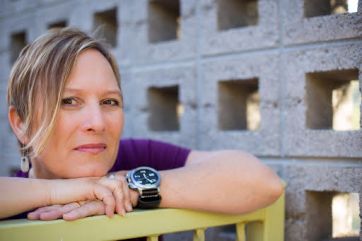
Photo: Renee Rivers, Selfie, Lhasa, Tibet, 2014.
You x place x culture x your interests x your memories x some kind of new insight is where the intersection of exciting new travel narratives emerge. Consider how a story may come to life after visiting a neighborhood ethnic market triggers a childhood memory, or how a grandparent’s journal takes you on a search for cousins across the country, or how sensuous food can transport you into the realm of imaginary travel, or how your college engineering notebooks inspire a trip to university archives or another country to research the science and history of aeronautics, or even how a family vacation may have gone hilariously wrong.
These ideas represent a tiny peephole into the rich and ready domain of travel writing available to writers of all backgrounds today.
In this workshop you will participate in:
exposure to many exciting expressions of travel writing
creative ways to access authors and practitioners of this craft
travel writing exercises meant to center you, your interests, and travel or every day experiences into a trip-tick for continued writing practices
reflective writing that explores where your internal and external travels may take you
finding travel writing and travel writing markets for your writing
mapping out story ideas and how to craft them for potential markets
Photo: in Phoenix, by Frankie Wheeler, North Mountain.
Renee G. Rivers’ interests can find her behind an acetylene torch, shooing urban chickens from her kitchen or traveling to remote locales.
She holds an M.A. in English from SUNY Brockport, a B.S. in Special Education, and B.A. in German via the Goethe-Institut–Muenchen.
Renee’s stories have appeared in: PBS Filmmaker Jillian Robinson’s Change Your Life Through Travel, Canyon Voices, and The Feminist Wire and have won international awards from SouthWest Writers and Tin House.
Renee currently writes about teaching in remote Alaskan villages, taking her father in a wheelchair to Mount Everest, and teaches First-Year Composition and Travel Writing at Arizona State University at the West Campus.
Creative Writing is one of those “good news/bad news” situations. The good news is that every writing tool you know and use can help make a story or poem or novel “move” more. The bad news is that every writing tool you know and use can ALSO make the movement and momentum of a story or poem or novel simply shudder limply and grind quite unmajestically to a stop.
All your writing tools, by definition, slow your writing down – because, by definition, they all use up the reader’s time and space and energy and attention. How you choose to manage that movement and momentum (ultimately your readers’ time and attention) are the keys to a better literary piece.
Explore how to establish and maintain movement and momentum in your writing to your advantage. In this workshop you’ll be exposed to several writing techniques that improve motion and momentum, and do a few short writing exercises yourself to get the feel for how a few of these techniques work and/or “fit” your writing (time permitting). Much of the focus for this workshop is on dialogue and description.
This workshop is free and open to the public. Breakfast pastries will be provided, but bring your own caffeine!
What & Who: Creative writing workshop, “How To Make Your Writing MOVE” will be conducted by Gary Lawrence, short story author and creative writing instructor.
When: Saturday, September 9th from 9:30AM to 11:30AM.
Where: GCC Main, Room LA-141.
Why: Because you REALLY don’t have anything better to do.
Gary Lawrence teaches composition and creative writing for GCC and Cochise College. He holds an MFA in Creative Writing from Vermont College of Fine Arts. He published an anthology of short stories in 2013 called Baffled. Gary has given several workshops at GCC before, with topics ranging from “Time in Fiction” to “Short Story Sequences” to “Writing Style.” Most recently Gary has published fiction and CNF short stories in Canyon Voices (ASU West’s Literary Ezine) and Cochise College’s Mirage. Gary currently lives in Sierra Vista and teaches CRW170/270 online for GCC.
“From Good to Great” was a highly-acclaimed management book in the 1990s. But advancing your business or your writing from good to great takes a lot of work.
A LOT of work.
We writers don’t talk about style much – but we should. All things being equal, writing style is what separates good writing from great writing. Whether it’s prose or poetry, writing style is the Great Differentiator. Your theme, plot, setting, characters can all be perfect and complementary even – supportive of one another – but without an almost invisible “assist” from the Writing-Style gods as well, you can have a good but mediocre result instead of a heart-stopping, bone-chilling, throat-gagging, head-pounding, breath-taking great result.
Defining exactly HOW writing style achieves this “over the top” push is a little like that well-worn definition of pornography: “I’ll know it when I see it.” But not quite. Come explore and analyze examples of where writing style makes all the difference — with Gary Lawrence, short story author and GCC creative writing instructor. Identify and take away a handful of writing style tips and techniques that can make or break your writing – whether you’re a beginner or a pro.
Gary Lawrence teaches composition and creative writing at GCC and Cochise College. His short stories have been published in The Rockford Review, Short Story America anthologies, Four Chambers (Phoenix Community Arts magazine), Mirage (literary arts magazine of Cochise College) and Canyon Voices (literary magazine of ASU West). He is a frequent workshop leader at GCC and in Sierra Vista AZ, where he lives now with wife Linda. Gary has been interviewed by NPR for his short story collection Baffled (2013), and in 2016 won first place in Cochise County for his flash fiction piece “BJ.” He has a BA in English from Rockford College and an MFA in writing from Vermont College of Fine Arts (Montpelier).
What & Who: Achilles Heel? Or Sweet Spot? Or, The X Factor? “Style” Takes Your Writing From Good to Great will be conducted by Gary Lawrence
If you don’t think that the way an adjective pairs perfectly with a noun is erotic, then you have a thing or two to learn…
This workshop focuses on developing prose, word by word, sentence by sentence, with agonizing attention to detail. Whether fiction, non-fiction, poetry, or lyrics, at the foundation of nearly any exquisite piece of writing is a grammatically sexy sentence in which every piece of it works together harmoniously to perfectly express its meaning.
Semi-colon or period? What associations does this word carry with it to the page? What is a synonym for synonym? These questions and more will be explored during our workshop as we discuss diction, connotation, denotation, punctuation, and other –tions while we practice crafting the most perfect, most fluid, sexiest sentences we’ve ever seen.
This workshop is free and open to the public. Breakfast-y refreshments will be provided, but bring your own caffeine!
What & Who: “Syntax: How to Write a Sexy Sentence” will be conducted by Jayme Cook.
When: Saturday, March 25th from 9:30AM to 11:30AM.
For the Spring semester of 2017, we will again continue our Saturday Workshop Series. The first of our Saturday Workshops is nearly here, and we are pleased to welcome a new presenter: David Martinez.
Explore the space between nonfiction and fiction through writing from your core, and discover truth. Writing is hard for a myriad of reasons, and one of the most trying and difficult aspects for many people is finding that space that makes the writing (whether fiction or nonfiction) ring true. Join us as we sift through writings and methods that may help us grab hold of that ever-questioned, ever-scrutinized truth.
What & Who: “The Role of Truth in Nonfiction, Fiction, & Autobiographical Fiction” will be conducted by David Martinez.
When: Saturday, February 11th from 9:30AM to 11:30AM.
Where: GCC Main Campus, LA-141
Why: Because if you don’t, your friends and family will think less of you.
Missed the workshop and want to see some of what Mark had to offer? Attended the workshop, but want to refresh your memory on some of Mark’s book selections and concepts? Head over to Workshop Materials and peruse the content covered in the workshop.
Have you ever read a book, watched a show, or sat through a movie and thought any of the following?
“Who does that? Real people don’t act like this!”
“I can’t keep track of these people. What’s his name is with what’s her face? Who’s that guy?”
“All of these characters could die in a fiery plane crash and I wouldn’t care.”
The fictional world may be fascinating, the conflicts may be intense, and the writing may be beautiful, but without fully realized characters to follow and root for, the story is ultimately doomed. Don’t fret, however. You can build unique and complex characters! Moreover, you can create characters with their own drive and will so that they surprise even you, the writer. Come join us or a free workshop to help breathe life into characters you will want to save from a plane crash.
Spend a morning in the company of other writers discussing narrative poetry. We’ll talk about when and why to use poetic form to convey narrative. We’ll also discuss point of view within narrative and the differences point of view can make in a poem. This workshop, as with all workshops, is free and open to the public.
There’s this scene you’ve been working on: Jack walks into a room. Diane’s already there. She’s drinking a mimosa and reading a travel guide for a place you haven’t decided on yet–maybe Barbados, maybe Detroit. Jack crosses the room. He tries to sit with her, but you forgot to include a chair, so he’s now hovering in an improvised yoga pose. Diane’s not even at a table, so when she releases the mimosa, it falls to the floor and shatters. This confuses the library staff because you’re not allowed to have mimosas in the library. Jack doesn’t even like to read, so he’s surprised to find himself in a library. He says, “When did I get to a library?” This echoes in the endless expanse of the void. When a librarian tells Diane about the no-mimosa rule, Diane says, “No dessert for me, thanks,” and then asks for the check. You suddenly remember that they’re at a tiki bar, but now the librarian feels overdressed. When the librarian tries to return to the Library Call Center, he trips over a bear rug on the floor and falls into a big pit—you know, like the one from the movie 300. Jack tries to reach out and help him, but the librarian seems miles away now. Diane leaves a tip on the floor and escapes, somehow, but you don’t remember there being any doors in the room. Maybe she climbs out a window or a skylight. Jack cries, lives the rest of his life alone, gets eaten by a lion floating in the void.
Sound familiar? No? Read more. It’s good for you, puts hair on your chest. Regardless, the point (there is one) is that place is often an underdeveloped and untapped resource in scene development. Where a conversation takes place can have just as much an impact on a scene as what your characters say. How your characters move, position themselves within that space, negotiate obstacles (bear rugs, bottomless pits, lions, etc.) can also flesh out the scene and present a more dynamic and engaging narrative. The Dancing in the Dark workshop will explore and discuss these concepts, Patrick Swayze, whether or not you can (in fact) put Baby in a corner, and The Boss.
What & Who: “Dancing in the Dark: Using Place & Choreography in Scene Development” will be conducted by Jeff Baker, English Faculty at GCC.
When: Saturday, September 10th from 9:30 to 11:30AM.
Where: GCC Main Campus, LA-141.
Why: Why not, tough guy?
This will be the first Saturday Workshop of the academic year, so we hope to see bright, happy, creative faces before Finals and The Nothing consume Fantasia, making everybody sad.








 GCC Creative Writing